
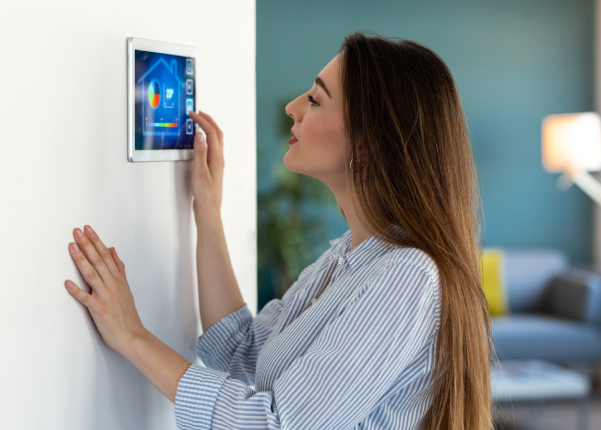
In today’s competitive real estate market, it seems that most homeowners are looking for strategic ways to maximise their property’s value. With every market shift, smart home technology plays a more significant role; its integration is fast becoming a key factor in determining a home’s worth. It’s about enhancing security, boosting energy efficiency, and making daily life more convenient for potential buyers. Therefore, understanding the impact of smart home features on property value is key for homeowners considering future resale.
But the worry of complex rewiring is a common concern. Thankfully, simple retrofit solutions work with your existing infrastructure, requiring no complete overhaul. To make the best investment, let’s first understand what modern buyers are looking for and why this technological shift is more than just a passing trend.
Why Modern Homebuyers Demand Smart Technology
One of the primary reasons for the growing impact of smart home features on property value is the significant shift in buyer preferences for smart home technology. This change is largely driven by demand from tech-savvy generations; modern homebuyers, particularly buyers like millennials and Gen Z, now prioritise homes that offer advanced technological features.
The growing demand encourages sellers to upgrade their properties to meet changing expectations. This expectation is simply part of modern living, where people now rely on technology to be integrated into their daily routines and keep up with their changing needs.
For instance, energy-conscious buyers may find smart lighting particularly appealing because of its remote control and scheduling capabilities. Similarly, features such as smart plugs can make it easier to manage compatible appliances and add convenience to everyday routines.
Ultimately, properties equipped with these sought-after smart features may appeal more strongly to buyers looking for modern convenience, security, and efficiency. With this market shift in mind, it is clear that certain technologies have proven particularly attractive to buyers; these are the features that can significantly enhance a property’s appeal, beginning with the one buyers prioritise most: security. Click here to learn more
High-return Investments in Home Security and Safety
When potential homebuyers consider a purchase, security is a top priority that plays a massive role in their final decision. Many modern homebuyers are increasingly interested in properties that offer smart technology, particularly features that improve security, convenience, and energy management. Not only does an integrated security system directly impact a home’s appraisal and increase property value, but it can also lead to potential savings on insurance premiums.
Remember, beyond the financial returns, you are offering buyers tangible enhanced security and peace of mind, a feature they perceive as highly valuable. A smart security setup can include several compatible features working together. Key features can include:
- Smart Locks
- Smart Sensors
Smart Locks can provide convenient access control while allowing homeowners to manage entry more easily. Smart sensors can help detect activity or specific conditions and send alerts, allowing homeowners to stay informed even when they are away from the property. The real value emerges when compatible devices work together through a unified system, allowing homeowners to manage them more conveniently from a centralised app.
Features such as instant alerts and remote access can make a smart security setup more convenient and appealing to potential buyers. While robust security forms the foundation of a modern home’s appeal, buyers are also looking for intelligent features that enhance daily comfort and reduce running costs.
Gaining Value Through Energy Efficiency and Convenience
Beyond security, two of the most significant contributors to increasing your smart home features property value are energy efficiency and convenience; hence, it’s clear these features add tangible worth. Creating a more energy-efficient home addresses modern buyer demands; as a result, the promise of lower running costs offers a powerful selling point.
Case in point: Smart AC control can contribute to both convenience and energy management. Depending on the system, homeowners can remotely manage compatible air conditioning units and create automated routines that suit their daily schedules. This can make it easier to manage indoor comfort while avoiding unnecessary energy use, which may be an attractive feature for energy-conscious homebuyers.
Similarly, smart lighting can combine convenience with energy efficiency. Remote control and automation provide greater flexibility while allowing homeowners to manage lighting according to their routines.
When discussing a truly connected home, it is important to consider how voice-controlled assistants can bring compatible features together. Integrating with these devices provides the kind of effortless, hands-free control over home functions that buyers appreciate.
For modern buyers, this type of integration can make a home feel more convenient, connected, and appealing, and it is increasingly becoming an attractive feature in contemporary homes. Even though these high-impact upgrades might seem complex, you don’t need a complete overhaul of your home’s wiring to install them.
Read More : Understanding the Investment Value of Modular Kitchen Costs
Making Smart Technology Accessible With Retrofit Solutions
When people think about home automation, they often picture fixed, hardwired installations designed to stay in your walls forever, making it harder to imagine upgrading without major disruption. But this is where retrofit home automation comes into play. It’s a modern approach that allows you to upgrade your existing home without needing extensive renovations.
The technology works by placing small retrofit modules neatly behind your existing switchboards, turning your ordinary switches into smart ones. What does this mean for your home’s look? Since the front plate of the switchboard stays the same, your room’s design is completely untouched, providing the key advantage: Preservation of home aesthetics.
Compared with traditional installations, this approach can minimise the need for major drilling and wall work, reducing disruption during installation. Since extensive wiring can add to the cost and complexity of an automation project, retrofit solutions can offer a practical and cost-effective alternative, depending on the system and installation requirements.
Another key advantage is scalability. You can start by automating a single room and expand the system as your needs or budget grow. This flexible approach makes retrofit home automation a practical way to introduce smart features that may improve your property’s appeal without requiring a large upfront investment.
A Calculated Approach to Future-proofing Your Home
Integrating smart home technology can be a strategic investment, helping to future-proof your property while potentially supporting its long-term appeal and value. These technologies can create a more secure, efficient, and convenient living environment that reflects changing buyer expectations. Best of all, retrofit automation makes these upgrades highly accessible, allowing you to start small and expand the system as your needs grow.
For homeowners and investors looking to stay competitive, smart technology can be a valuable consideration for long-term property appeal. If you want to understand how these upgrades can be seamlessly integrated, a professional home automation company in Chennai (https://www.hsmartliving.com/) can provide a tailored plan. Contact Hsmart Living today to discover how our intelligent solutions can improve your smart home features and property value.